Blue or Maroon? How State of Origin Loyalty Is Quietly Draining Aussie Punters
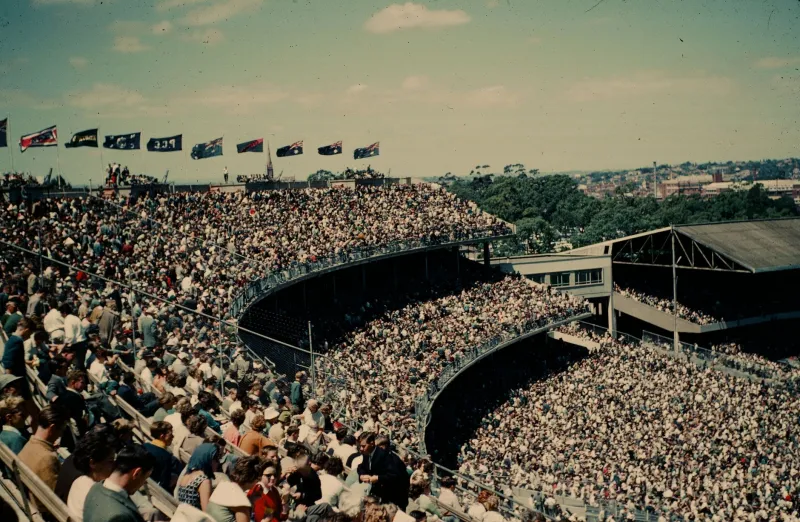
There are few moments in Australian sport that hit quite like State of Origin. The roar inside Suncorp Stadium. The blue wall at Accor. Grown adults wearing face paint on a Wednesday night in June. It's tribal, it's electric, and it's one of the most uniquely Australian experiences sport has to offer.
It's also one of the most dangerous betting events of the year.
Not because the odds are crooked or the markets are obscure — but because Origin does something to Aussie punters that almost no other event can. It turns otherwise rational people into creatures of pure instinct. And when instinct drives your wagering decisions, the bookmakers are the ones laughing.
The Tribal Trap: Backing Your State Because It's Your State
Let's start with the most obvious problem: punters backing their home state regardless of what the markets, form guides, or injury lists are actually telling them.
This isn't unique to Origin, but the intensity here is unlike anything else. A New South Wales fan who'd never dream of backing a losing cricket team at bad odds will happily plonk money on the Blues at -180 when Queensland has won five of the last seven series. A Queenslander who meticulously researches NRL multis all season long will abandon every ounce of that discipline the moment the Maroons run out.
The psychological term for this is in-group bias — the tendency to favour your own tribe, often at the expense of objective judgement. In betting terms, it means you're not actually assessing the matchup. You're paying a loyalty tax.
And loyalty taxes don't pay out.
Superstition Season: The Rituals That Feel Real
Origin also has a unique relationship with superstition that goes beyond the usual sporting quirks. Ask any seasoned Origin punter and they'll tell you about the jersey they wore when their team won, the pub they were at when the Blues finally broke Queensland's dominance, the exact order they place their bets before kickoff.
These rituals feel meaningful because Origin itself feels meaningful. The problem is that punters start applying superstitious logic to their actual wagering — betting on the same markets in the same way because it 'worked' a couple of years ago, or avoiding certain bet types because they were part of a losing night.
The reality is that your lucky jersey has zero correlation with what happens on the field at Lang Park. But the brain doesn't process it that way during Origin season. Emotional arousal — and Origin delivers that in spades — makes superstitious thinking feel more credible than it actually is.
The Series Momentum Myth
Here's one that catches a lot of punters off guard: the assumption that series momentum is a reliable betting signal.
The logic sounds sensible enough. Team A wins Game 1 convincingly, so they'll carry that confidence into Game 2. Or Team B lost Game 1 at home, so they'll come out firing as underdogs in Game 2 with a point to prove.
The problem is that Origin is a best-of-three format, which means the data set is tiny and the variance is enormous. Coaches make significant tactical adjustments between games. Squads change. A player who was unplayable in Game 1 might be carrying a knock by Game 2. The series narrative that feels so compelling on a Thursday morning is often completely irrelevant by the time kick-off arrives.
Bookmakers know punters love a narrative. They price accordingly. If the momentum story is obvious enough that every punter in Australia is backing it, you can bet it's already cooked into the line.
Chasing After a Series Loss
Perhaps the most financially damaging behaviour Origin produces is what happens after a series is decided. When your team loses the series in Game 2, there's a particular kind of grief that settles in — and grief makes people do strange things with their money.
Game 3, once the series is settled, is often called a 'dead rubber.' But for emotionally invested punters, it's anything but. The urge to back your team to win the dead rubber — to salvage something, to restore some pride — is powerful and almost completely irrational from a value perspective.
Odds on dead rubber games can be wildly distorted by public sentiment. The losing team's fans often inflate their price through sheer volume of sentimental bets. Meanwhile, the winning team, already celebrating a series victory, may have a squad that's rotating players or managing workloads ahead of the finals. The form signals are murky, but the emotional pull is crystal clear.
Chasing a series loss with your wallet doesn't bring the trophy back. It just extends the damage.
A Framework for Betting Origin With Your Head, Not Your Heart
None of this means you shouldn't bet on State of Origin. It means you should bet on it differently.
Separate your fan activity from your punting activity. Watch the game, wear the jersey, scream at the TV — but treat your betting account as a completely separate exercise. Before you place any Origin bet, ask yourself: would I back this if I had no idea which state I was from?
Check the line before you check your loyalty. If Queensland are $1.55 favourites and you're a Blues fan, the question isn't 'should I back NSW to win?' The question is 'what do I actually think the probability of a NSW win is, and does $2.40 represent fair value for that?' If you can't answer that objectively, you shouldn't be betting it.
Treat each game as a standalone event. Don't let Game 1 result cloud your analysis of Game 2. Look at the squads named, the venue, recent NRL form of key players, and any coaching changes. The narrative is noise. The specifics are signal.
Set a hard limit before the series starts. Origin is a three-game series. Decide upfront how much you're comfortable allocating across all three games, and don't let a bad Game 1 result push you into oversizing Game 2 to recover.
Be especially cautious in dead rubbers. If you're going to bet Game 3 after a series is decided, do it purely on analytical grounds. Is there genuine value in the line? Are both squads motivated? If you're only betting because your team needs to 'prove something,' that's emotion talking, not edge.
The Bottom Line
State of Origin is one of the greatest sporting events Australia produces. The passion, the history, the sheer intensity of it — that's worth celebrating. But that same passion is precisely what makes Origin season a minefield for punters who haven't done the work to separate their love of the game from their approach to the markets.
The bookmakers understand exactly what Origin does to the average punter. They've built their entire pricing model around it. The only way to compete is to be the punter who feels the emotion and then deliberately sets it aside before opening a betting app.
Blue or Maroon — it doesn't matter. What matters is whether the price makes sense. That's the only loyalty worth having when real money is on the line.