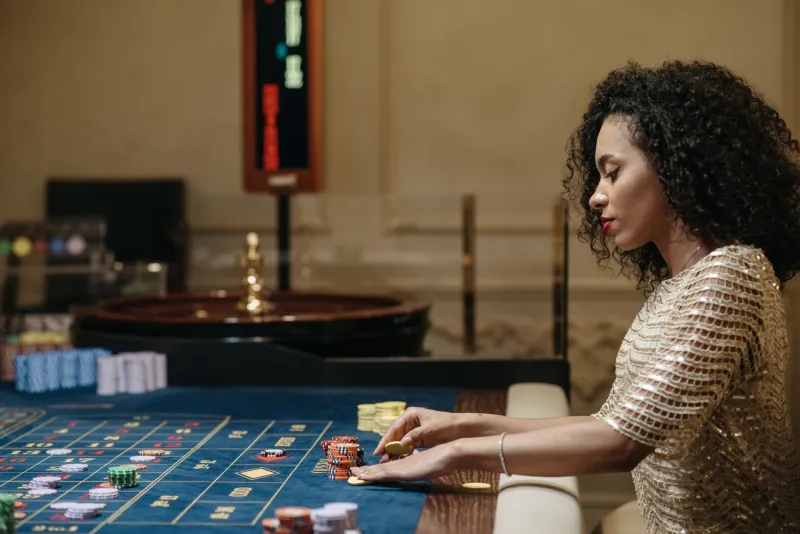
Grass Is Always Greener: How Jumping Between Sports Betting and the Casino Is Quietly Costing You Double

There's a moment most Australian punters know intimately. Your Saturday multi has gone down in flames — some midfielder you'd never heard of before Thursday gets subbed out in the first quarter, and the whole thing unravels. You're sitting there, phone in hand, staring at your balance. The sportsbook feels poisoned. So you swipe over to the casino tab. Fresh start, different game, different luck. Right?
Wrong. What you're actually doing is one of the most reliably expensive moves in the punter's playbook — and the fact that it feels logical in the moment is precisely what makes it so dangerous.
Two Different Games, One Very Familiar Trap
Sports betting and casino gaming are genuinely distinct disciplines. That's not a throwaway line — it's the crux of why switching between them is so costly. Betting on the NRL or AFL requires research, form analysis, an understanding of line movement, and the patience to wait for genuine value. Casino games, whether that's live blackjack, roulette, or the pokies, operate on fixed mathematical edges that no amount of research changes. The skills don't transfer.
When you move from one to the other mid-session, you're not applying expertise — you're abandoning it. You're walking into a casino (or the casino tab on your app) with a sports punter's mindset, which is built around finding edges that don't exist in the same way on a roulette wheel. The house edge on European roulette sits around 2.7%. The pokies can run anywhere from 2% to 10% depending on the machine. These are fixed costs you pay every single spin, regardless of how well you read last week's injury report.
The Psychology Behind the Switch
So why do we do it? The short answer is loss aversion — one of the most well-documented quirks of human decision-making. When we lose in one domain, the instinct isn't to stop gambling. It's to find a faster path back to even. The sportsbook feels slow when you're chasing. You've got to wait for games, wait for markets to settle, deal with the frustration of near-misses and late scratching. The casino offers instant resolution. Spin the wheel, deal the cards, done in thirty seconds.
That speed is not your friend. It's the mechanism that accelerates losses. You can burn through a week's betting budget in twenty minutes at a live table in a way that simply isn't possible waiting for a Tuesday night NRL game to kick off. The casino doesn't move faster because it's more exciting — it moves faster because it's designed to.
There's also a cognitive reframing happening when you switch. Punters often mentally separate their sportsbook balance from their casino balance, treating them as different pools of money. Lost two hundred on the footy? That's gone. The fifty you're now betting at blackjack feels like a fresh fifty, not part of the same session. This mental accounting trick is how a bad Saturday afternoon becomes a catastrophic Saturday night.
When Losing on the Footy Sends You Straight to the Pokies
The reverse pattern is just as common, and just as damaging. Casino sessions that go sideways — a run of bad luck on the live tables, a drought on the pokies — often send players scrambling toward the sportsbook. The reasoning goes: at least with sports I have knowledge, I can make informed decisions, I'm not just spinning and hoping.
The problem is that emotional state follows you across the tab. You're not suddenly a sharper, more disciplined sports bettor because you've switched apps. You're a frustrated gambler looking for a win, and frustrated gamblers make terrible betting decisions. They back favourites at terrible odds because they just need something to come in. They throw money at same-game multis because the potential payout feels like it would fix everything. They ignore the research they'd normally do and trust their gut, which at that moment is basically just a stomach full of adrenaline and bad decisions.
Recognising the Pattern Before It Costs You
The first step to breaking this cycle is learning to identify what's actually driving the switch. Ask yourself honestly: am I moving to casino games because there's a genuine opportunity I want to take, or because the sportsbook just burned me and I want action? Am I heading to the sportsbook because I've found a market with real value, or because I just dropped sixty bucks on the pokies and I want it back?
If the answer is the latter in either case, the move is to close the app entirely. Not switch tabs — close it.
Practical strategies that help:
Separate your budgets and treat them as separate sessions. If you've allocated a hundred dollars to sports betting this weekend and it's gone, the session is over. The casino budget is for a different day, not a recovery mechanism.
Build in a cooling-off period between switching. If you genuinely want to play both sports and casino across a weekend, decide in advance when each session happens. Sunday afternoon for the footy markets, Saturday night for an hour of live blackjack. Don't let one bleed into the other reactively.
Track your switching behaviour. Keep a simple log — not just of wins and losses, but of why you moved from one format to the other. You'll start seeing the pattern written in your own handwriting, which is considerably more convincing than reading about it in an article.
Set hard stops, not soft ones. "I'll stop after I lose another fifty" is not a stop. It's an invitation to keep going. A hard stop is a dollar figure you decide before you start, and you close the app the moment you hit it — regardless of whether you're on a cold streak or a hot one.
Discipline Isn't Boring — It's the Only Strategy That Survives
There's a version of the punter's life where you're fluent in both sports betting and casino gaming, you enjoy both, and you approach each with clear eyes and a separate budget. That's a legitimate way to engage with both products, and there's nothing wrong with it.
But that version requires discipline that most of us, if we're being honest, don't have in the middle of a losing session. The switch between formats almost always happens at the worst possible time — when emotions are running hot, when the urge to recover is strongest, and when the capacity for clear thinking is at its lowest.
The sportsbook and the casino are both enjoyable ways to spend time and money when you're in the right headspace. They're both expensive when you're not. And when you're using one to escape the other, you're not in the right headspace for either.
Knowing that — really knowing it, not just nodding along — is the difference between a punter who keeps their head above water and one who ends up wondering where the whole weekend's budget went before Sunday dinner.