Cold Feet, Hot Losses: Why Punters Blow Their Best Bets in the Final Minutes

You've spent the better part of Tuesday night going through the form. You've checked the track conditions, weighed up the jockey bookings, read three different tipsters, and landed on a selection you genuinely feel good about. Wednesday morning comes, you place your bet, and for about 48 hours you're quietly confident.
Then race day arrives. The barriers are minutes away. Someone in the group chat says they've heard the favourite has been working brilliantly. The odds on your pick drift slightly. And just like that, the conviction you carried all week starts to crack.
You change the bet.
The horse you switched from wins by two lengths.
If that sequence sounds familiar, you're not alone — and you're not weak-willed. What you're experiencing is one of the most well-documented psychological traps in wagering, and it hits Australian punters hardest at exactly the moments that matter most.
The Research Is Done, So Why Does Doubt Show Up Late?
There's a concept in behavioural psychology called "decision fatigue" — the idea that the more choices we make, the worse our judgment becomes over time. But what happens with last-minute bet changes is actually something slightly different. It's not that punters run out of mental energy. It's that new, emotionally charged information floods in right before the moment of commitment, and the brain treats urgency as a signal to act.
Think about what happens in the final five minutes before a major race. Scratchings get confirmed. Barrier draws are reassessed. Track conditions update. Your mates start weighing in. The odds shift. There's noise everywhere, and the human brain — wired to prioritise recent and vivid information over careful prior analysis — treats all of that late-breaking chatter as more meaningful than it actually is.
The research you did on Tuesday? That gets quietly overridden by what someone said in the TAB queue on Saturday afternoon.
Melbourne Cup and the Chaos of the Mounting Yard
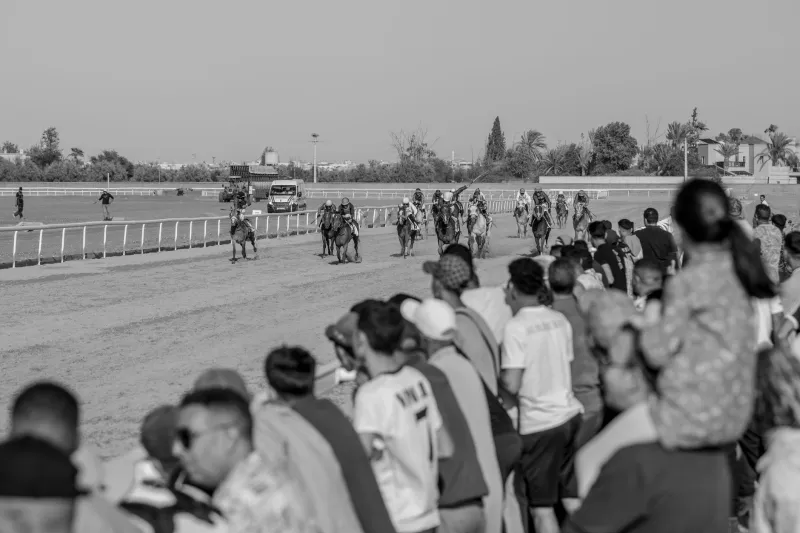
Nowhere is this more obvious than at Flemington on the first Tuesday in November. The Melbourne Cup is arguably the single biggest betting event on the Australian calendar, and it's also a masterclass in how social pressure dismantles good decision-making.
Punters who've spent weeks analysing international form, trainer patterns, and weight-for-age trends suddenly find themselves surrounded by thousands of people, live television coverage, celebrity tips, and a mounting yard full of horses that all look impressive when you're standing close enough. The favourite gets a roar from the crowd. Someone near you says they've heard a whisper on a roughie. The horse you backed is sweating up slightly.
All of that is noise. But it doesn't feel like noise. It feels like intelligence, and the closer you get to the jump, the harder it becomes to separate the two.
The punters who walk away from Cup day ahead are almost never the ones who made a brilliant last-minute switch. They're the ones who made a plan and stuck to it through the chaos.
FOMO Is the Real Favourite
Fear of missing out is the silent favourite in every race field, and it doesn't need a jockey. It runs in your head, and it picks up pace in the final stretch.
Here's how it typically plays out in sports betting. You've backed a team, done your homework, and you're comfortable with the selection. Then, about twenty minutes before the match, you see someone on social media absolutely raving about the opposition. They've got stats, they've got a confident tone, they've got followers. Suddenly you're questioning everything.
You don't switch completely — that would feel too drastic. So you hedge. You throw a smaller bet on the other side "just in case." Now you've diluted your original position, added a new liability, and ensured that whichever way the result goes, you've undercut your own returns.
That hedge wasn't strategy. It was FOMO wearing a strategy costume.
The Group Chat Problem
Australian punters are, culturally speaking, a social bunch. The footy tipping comp, the Melbourne Cup office sweepstakes, the Saturday racing group chat — betting in this country is often a communal activity, and that's part of what makes it enjoyable.
But the group chat is also one of the most dangerous places to be in the final minutes before a race or match. Everyone's confident. Everyone's got a tip. And because you want to be part of the conversation, you feel a quiet pull toward whatever the group consensus is trending toward.
This is social conformity doing what it's designed to do — helping humans fit in with their tribe. The problem is that your tribe's collective confidence has nothing to do with whether their tip is actually any good. Crowds can be spectacularly wrong, and betting markets are littered with evidence of popular opinion leading punters off a cliff.
If the group chat is changing your mind five minutes out from the jump, close it. You can catch up on the banter after the race.
Why the Switch Almost Always Loses
Here's the uncomfortable truth: last-minute bet changes don't just occasionally go wrong. They go wrong at a disproportionate rate, and there's a structural reason for that.
By the time you're making a frantic switch in the final minutes, you're not making a considered decision. You're making a reactive one. You're responding to pressure, not analysing information. And the bet you're switching to is almost always the obvious, popular choice — the one the market has already priced efficiently, leaving little real value on the table.
Meanwhile, the selection you're abandoning? That was the product of calm, unhurried thinking. It might have been a roughie with genuine claims, or a value play the market hadn't fully accounted for. By switching at the last moment, you're trading a considered position for an emotional one, and the odds almost never reflect that trade in your favour.
Building a Wall Around Your Selections
The fix isn't complicated, even if it requires some discipline to execute.
First, set a cut-off time. Decide that your selections are locked in at least 30 minutes before the race or match. After that point, you can watch, you can follow, but you don't touch the bet. Treat that window like a cooling-off period — not for the bet itself, but for your own psychology.
Second, write down your reasoning when you make the selection. Not a novel — just a sentence or two about why you backed what you backed. When doubt creeps in later, read it back. It's a useful anchor against the noise.
Third, turn off the noise. The group chat, the live odds feed, the social media takes — none of that is going to give you better information in the final five minutes than you already have. It's just going to give you more anxiety.
And finally, track your switches. Keep a record of every time you changed a selection at the last minute, and note what would have happened if you'd stuck with your original call. Most punters who do this for a month are genuinely shocked by what they find.
The Bet You Made on Tuesday Is Usually Smarter Than the One You're Making Right Now
The version of you that did the research, weighed the form, and made a calm selection earlier in the week is almost always a better punter than the version of you standing in a crowded TAB with five minutes to go and three different opinions ringing in your ears.
Respect that earlier version of yourself. The slip between cup and lips — between a well-researched selection and the panicked switch that replaces it — is one of the most expensive distances in Australian punting. And unlike bad luck or a rough barrier draw, it's entirely within your control.