When the Whistle Blows and Logic Goes Out the Window: The Psychology Behind Shootout Betting
There's a moment — you've probably felt it — when a football match hits 1-1 after extra time and the referee signals for a penalty shootout. Something shifts. The spreadsheet in your head closes. The bankroll rules you swore by evaporate. Suddenly you're not a calculated punter anymore. You're a gambler, pure and simple, and the odds don't matter half as much as your gut.
This isn't a character flaw. It's neuroscience. And it's costing Aussie punters a stack of cash every single season — across football, cricket, and rugby league alike.
Your Brain on Binary Outcomes
Here's the thing about 50-50 moments: they feel deceptively manageable. When something is framed as a coin flip, the human brain treats it like a fair bet, regardless of what the actual data says. Behavioural economists call this "outcome bias" — we judge the quality of a decision based on what happened, not on whether the reasoning was sound in the first place.
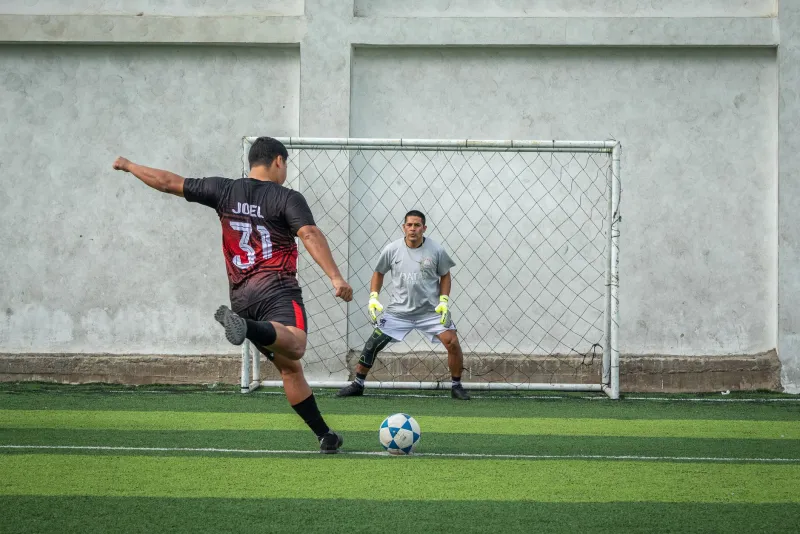
Penalty shootouts are the sporting world's ultimate binary trap. Five kicks per side, one goalkeeper, sudden death if it's still level. There's no team shape to analyse, no possession stats to lean on, no weather advantage. It's just one player, one ball, and a keeper making a split-second guess. That simplicity is exactly what makes it so dangerous for punters.
When a market strips away complexity, it strips away the tools disciplined bettors rely on. And when those tools disappear, emotion fills the vacuum.
The Super Over Problem
Cricket fans know this feeling intimately. The BBL has made super overs a regular fixture, and the IPL has had its share of nail-biters too. Six balls to decide a match. Two batters, one bowler, and the whole thing wrapped up in under five minutes.
What happens in betting markets during a super over? Volumes spike. Margins widen. And punters — particularly those who've been watching the game for three hours — start backing their emotional read of the situation rather than anything resembling form.
You might tell yourself you're backing the better side. But ask yourself honestly: are you analysing the matchup, or are you riding the adrenaline of having watched four wickets fall in the last two overs? There's a difference, and it's worth about fifty bucks to the bookmaker.
Sudden Death in Rugby League: The Trap Nobody Talks About
The NRL finals series is prime territory for this kind of thinking. Golden point — that agonising extra time format where a single field goal ends it all — creates one of the most emotionally charged betting environments in Australian sport.
Punters who've been backing a team all night suddenly face a moment where the whole match hinges on one tired halfback from forty metres out. The temptation to double down, to "back your read" of the game, is overwhelming. The live betting market moves fast, the adrenaline is pumping, and the rational part of your brain is running on fumes.
Research into in-play betting behaviour consistently shows that wager sizes increase during high-intensity moments — and that accuracy of prediction drops at the same time. You're betting more and thinking less. That's not a winning combination.
Why Discipline Breaks Down Under Pressure
Sports psychologists have a term for what happens to athletes under sudden-death pressure: "choking." The prefrontal cortex — responsible for rational decision-making — gets overwhelmed by the limbic system, which is basically your brain's panic room. Emotional responses hijack logical ones.
Punters go through a version of the same thing. The difference is that athletes train specifically for high-pressure moments. Most bettors don't.
When a match enters shootout territory, several things happen at once:
- The stakes feel artificially elevated. Even if you've only got a small wager on the match, sudden death makes it feel like everything is on the line.
- The market becomes harder to read. Live odds in shootouts shift rapidly and often irrationally. You're not getting value — you're getting noise.
- Your recent experience colours your judgement. If the team you're backing has looked shaky in the last ten minutes, you'll probably undervalue them. If they've been dominant, you'll overvalue them. Neither adjustment is necessarily correct.
The 50-50 Illusion
Here's a stat worth sitting with: in major football tournaments, the team that goes first in a penalty shootout wins roughly 60% of the time. That's not a coin flip. Order matters. Psychological momentum matters. Individual penalty records matter.
But in the heat of the moment, punters flatten all of that into "it's basically 50-50, so I'll back my team." That mental shortcut is exactly how bookmakers make money during shootouts. The market knows more than your gut does, and the market has already priced in the variables you're ignoring.
How to Protect Yourself When the Pressure Peaks
None of this means you should avoid betting on high-stakes moments altogether. But there are a few habits worth building before the next shootout, super over, or golden point situation rolls around.
Set a hard limit before the match, not during it. Decide in advance what you're willing to put on any live market that emerges from sudden death. When the moment arrives, you've already made the decision — your emotional brain doesn't get a vote.
Treat shootout markets like a separate bet entirely. Don't think of it as "adding to your existing position." It's a new market with new dynamics. Would you back this bet if you'd come to it cold, without three hours of emotional investment in the game? If the answer is no, walk away.
Recognise the adrenaline for what it is. That feeling of certainty you get when a team you've been watching all night steps up to the spot? That's not insight. That's your nervous system lying to you. Experienced punters learn to treat that feeling as a warning sign, not a green light.
Look at the data before the game, not during it. Penalty conversion rates by team and player, super over records in the BBL, golden point win percentages by club — this stuff is available. Doing that homework before kickoff means you're not scrambling for logic in a moment when logic is hardest to find.
The Bottom Line
Sudden death moments are designed to be dramatic. That drama is what makes sport worth watching. But it's also what makes it so easy for disciplined punters to become reckless gamblers in the space of about ninety seconds.
The best betting strategies aren't built for average moments — they're built to survive the extraordinary ones. When a match goes to a shootout, the question isn't just "who's going to win?" It's "am I actually thinking clearly right now, or am I just along for the ride?"
Most of the time, if you're honest with yourself, it's the second one. And knowing that might just be the most valuable edge you have.